
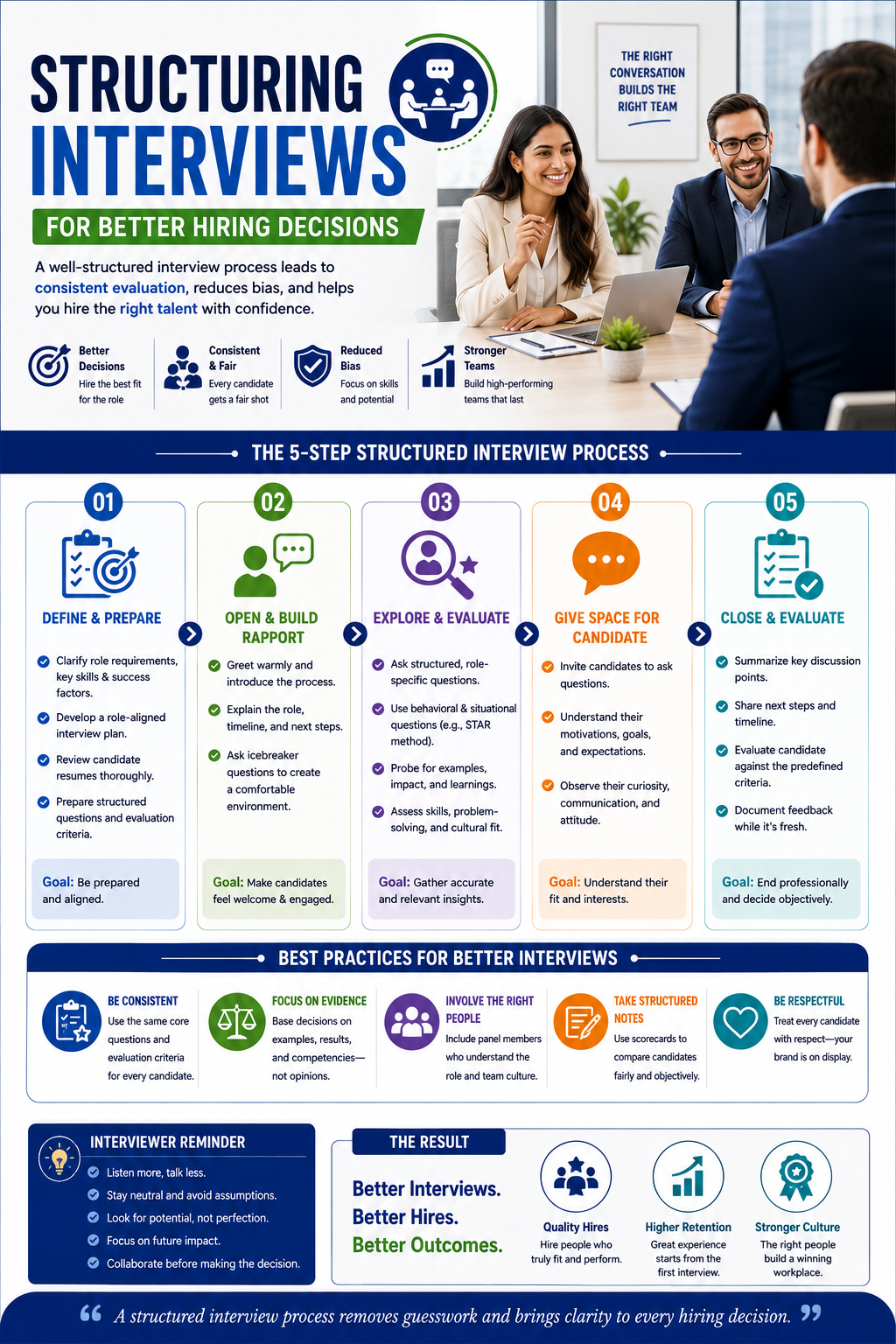
Interviews play a critical role in every hiring decision, but relying on unstructured conversations often leads to inconsistent evaluations and unconscious bias. A structured interview process ensures every candidate is assessed fairly using the same criteria, helping employers identify the best person for the role.
1. Define the role and evaluation criteria
Before interviewing candidates, clearly define the skills, qualifications, competencies, and behavioural traits required for the role. Prepare a scorecard that interviewers can use consistently for every applicant.
2. Ask every candidate the same core questions
Using a standard set of interview questions allows candidates to be compared fairly. Include behavioural and situational questions that encourage candidates to explain how they handled real workplace situations using examples.
3. Evaluate evidence, not assumptions
Focus on responses supported by real experiences and measurable achievements rather than personal opinions or first impressions. Encourage interviewers to rate answers against predefined criteria immediately after each interview.
4. Give candidates an opportunity to engage
A structured interview is not a one-way conversation. Allow candidates time to ask questions about the role, company culture, growth opportunities, and expectations. This creates a positive candidate experience while helping both parties assess mutual fit.
5. Document and review objectively
Record interview notes using standardized evaluation forms. Compare candidates based on evidence collected during the interview rather than memory or informal discussions. This improves transparency and supports better hiring decisions.
Best practices for structured interviews
- Prepare interview questions before meeting candidates.
- Use the same interview format for every applicant.
- Focus on job-related competencies and behaviours.
- Take structured notes during every interview.
- Involve relevant stakeholders where appropriate.
- Evaluate candidates immediately after the interview.
- Maintain professionalism and respect throughout the process.
Organizations that implement structured interviews typically make more confident hiring decisions, improve candidate experience, reduce hiring bias, and build stronger teams over time.