The workplace is changing faster than ever. New technologies, automation, artificial intelligence, and evolving business models are creating new expectations from professionals across industries. To remain valuable and competitive, professionals need a combination of technical expertise, communication ability, adaptability, and leadership skills.
1. Technical skills and digital expertise
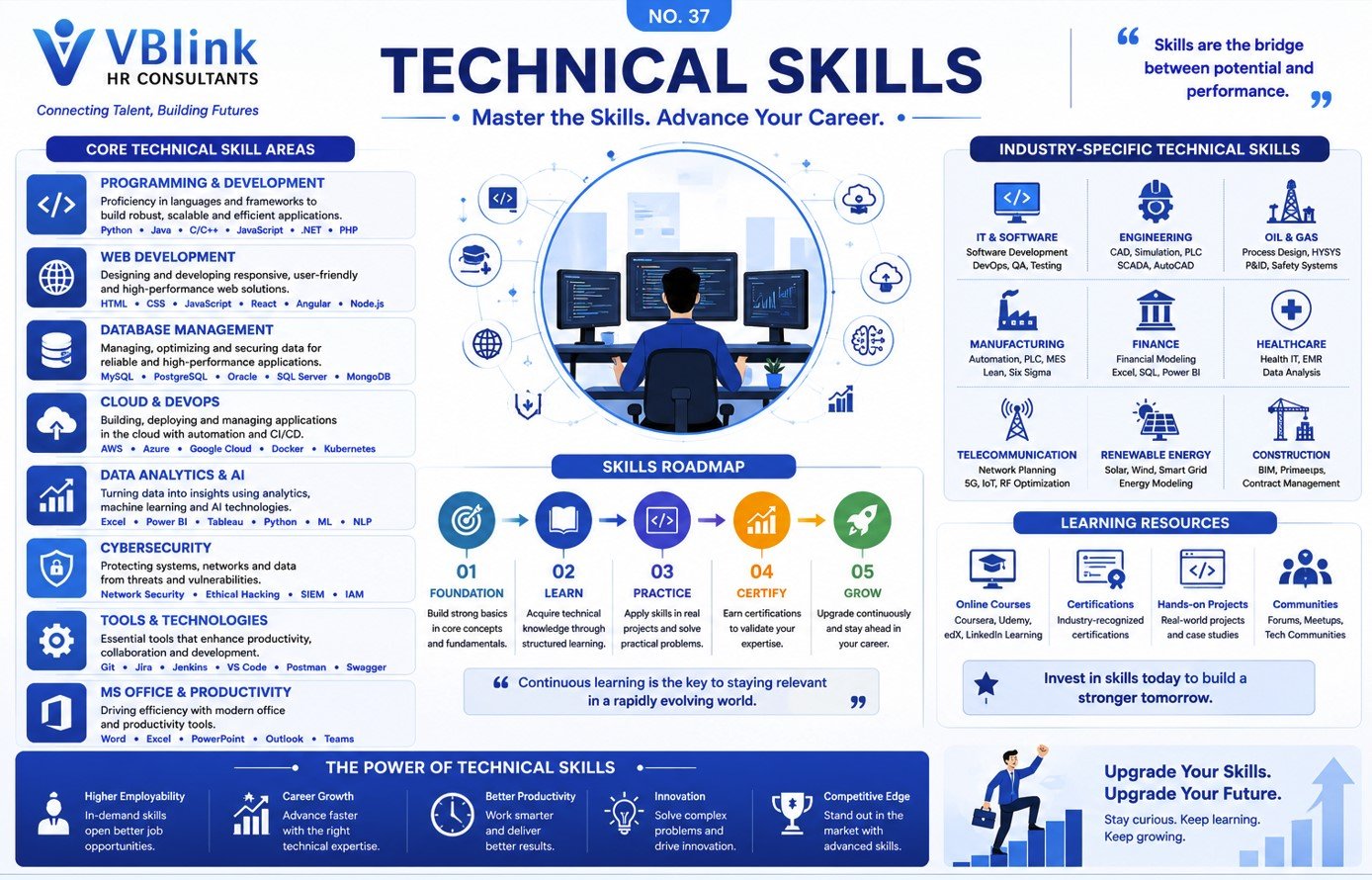
Technical skills continue to be among the most valuable capabilities employers look for in 2026. Professionals who understand modern tools, platforms, and digital workflows can contribute more effectively to their organizations.
Important technical skill areas include:
- Programming and software development skills.
- Web development technologies and digital solutions.
- Database management and data handling.
- Cloud computing and DevOps practices.
- Data analytics, artificial intelligence, and machine learning.
- Cybersecurity awareness and information protection.
2. Data analytics and AI skills
Data-driven decision making has become essential for organizations. Professionals who can analyse information, identify patterns, and use AI-powered tools can improve productivity and business outcomes.
Key areas include:
- Data visualization and reporting.
- Artificial intelligence fundamentals.
- Machine learning concepts.
- Business intelligence tools.
- Automation and smart workflows.
3. Communication and collaboration skills
Technical knowledge alone is not enough. Employers increasingly value professionals who can communicate ideas clearly, collaborate with teams, and build strong working relationships.
- Effective verbal and written communication.
- Presentation and storytelling skills.
- Active listening.
- Team collaboration.
- Conflict resolution.
4. Leadership and problem-solving skills
Organizations need professionals who can take ownership, solve problems, and guide teams toward better outcomes. Leadership skills are valuable not only for managers but also for individual contributors.
- Decision-making ability.
- Critical thinking.
- Strategic planning.
- Innovation mindset.
- Responsibility and accountability.
5. Industry-specific skills
Different industries require specialized knowledge. Professionals should continuously upgrade their skills based on industry trends and future opportunities.
- IT and software development.
- Engineering and manufacturing technologies.
- Oil & Gas process design and digital tools.
- Healthcare technology.
- Renewable energy systems.
- Finance and business analytics.
6. Continuous learning and career growth
Successful professionals understand that learning is a continuous journey. Regularly upgrading knowledge through online courses, certifications, projects, and practical experience helps individuals stay ahead in their careers.
- Learn new technologies and industry tools.
- Earn professional certifications.
- Work on practical projects.
- Participate in professional communities.
- Develop a growth mindset.
Why skill development matters in 2026
Professionals with strong technical abilities, communication skills, and adaptability have better opportunities for career advancement. Continuous improvement helps individuals remain employable and prepared for future workplace challenges.