
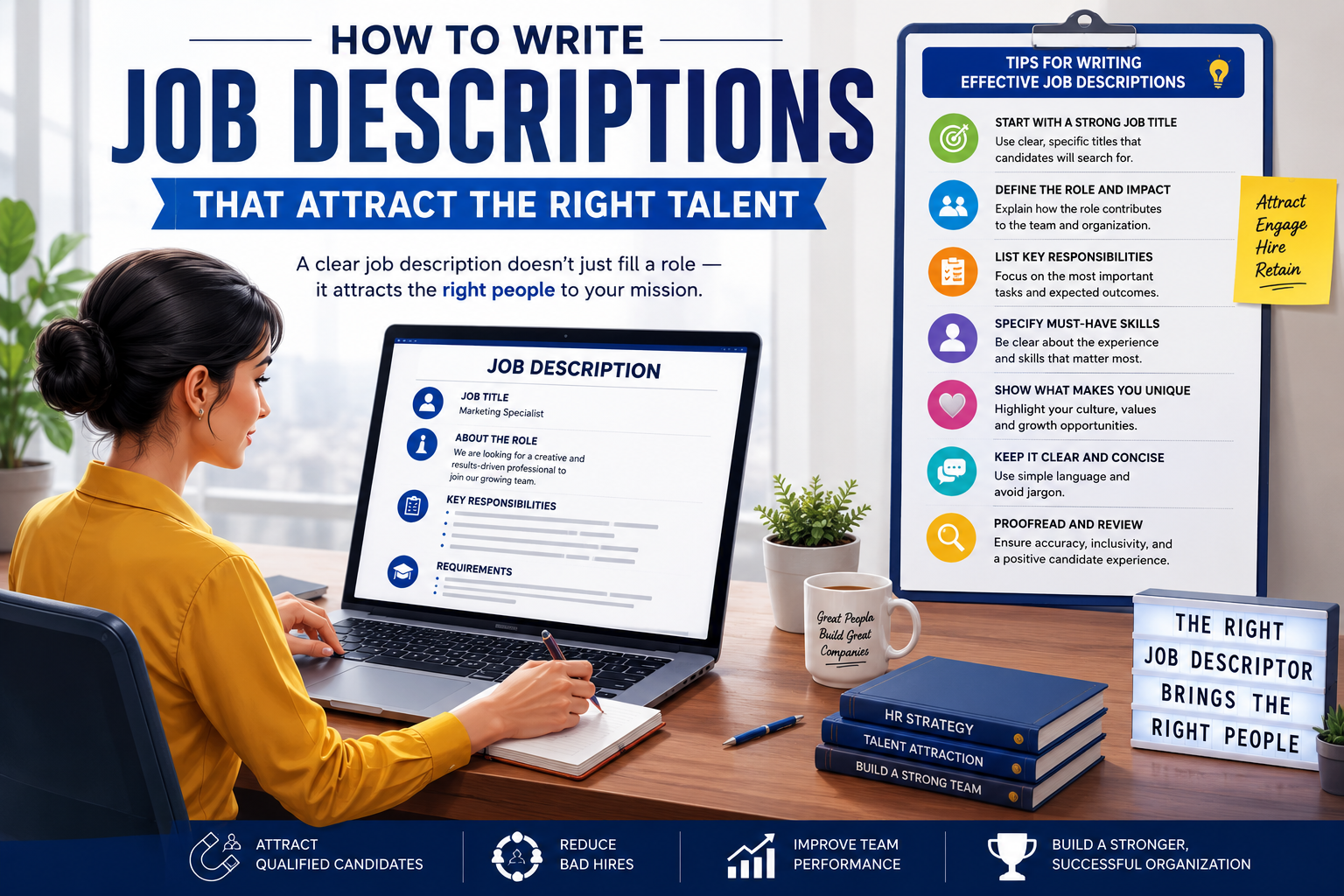
1. Start with a clear and searchable job title
Use simple, industry-recognized job titles that candidates are likely to search for. Avoid creative titles that may confuse applicants or reduce visibility in online job searches. A straightforward title increases the chances of attracting relevant talent.
2. Explain the purpose of the role
Begin with a brief overview describing how the position contributes to the organization. Candidates want to understand why the role exists, what impact they will have, and how they will contribute to business success.
3. Clearly list key responsibilities
Organize responsibilities into concise bullet points that focus on the most important duties. Keep the list practical and prioritize daily responsibilities over occasional tasks so candidates understand what the role truly involves.
- Daily operational responsibilities.
- Reporting relationships.
- Performance expectations.
- Team collaboration.
- Customer or client interaction.
4. Define essential qualifications and skills
Clearly distinguish between mandatory qualifications and preferred skills. Overly long requirement lists often discourage talented candidates from applying. Focus only on competencies that are genuinely necessary for success in the role.
5. Highlight your company culture
Candidates evaluate employers just as employers evaluate candidates. Describe your work environment, company values, employee benefits, career growth opportunities, and learning culture. These details help candidates determine whether your organization is the right fit.
6. Keep the language simple and inclusive
Avoid unnecessary jargon, complicated terminology, or biased language. Use inclusive wording that welcomes applicants from diverse backgrounds. A clear writing style improves readability and encourages more qualified candidates to apply.
7. Proofread before publishing
Review the job description carefully to eliminate spelling mistakes, formatting issues, and inconsistencies. Ensure salary information, location, qualifications, and contact details are accurate before the vacancy goes live.
Conclusion
Investing time in writing high-quality job descriptions leads to better applications, faster recruitment, and improved long-term employee performance. Every vacancy deserves a clear, structured, and candidate-focused description.
